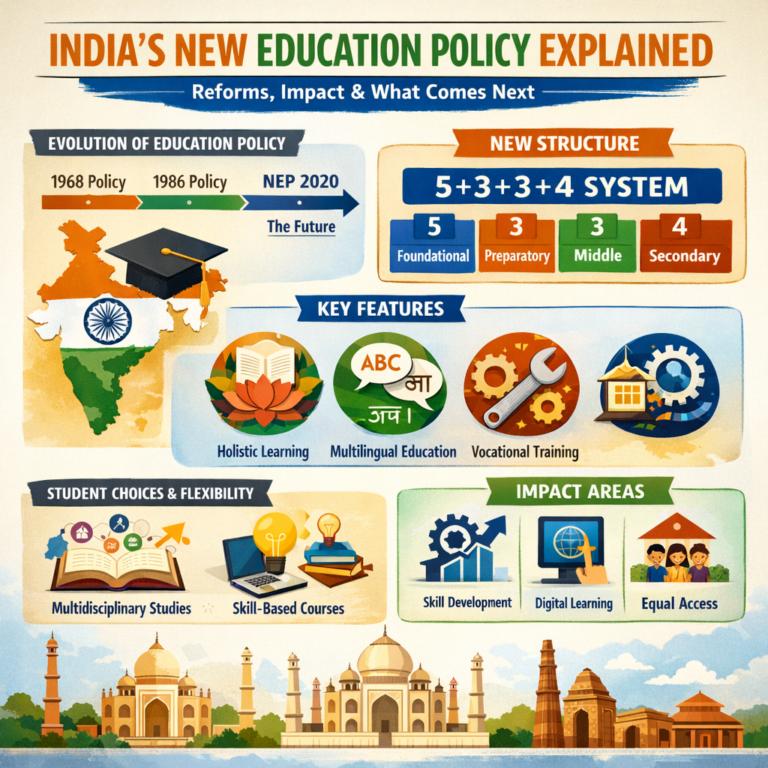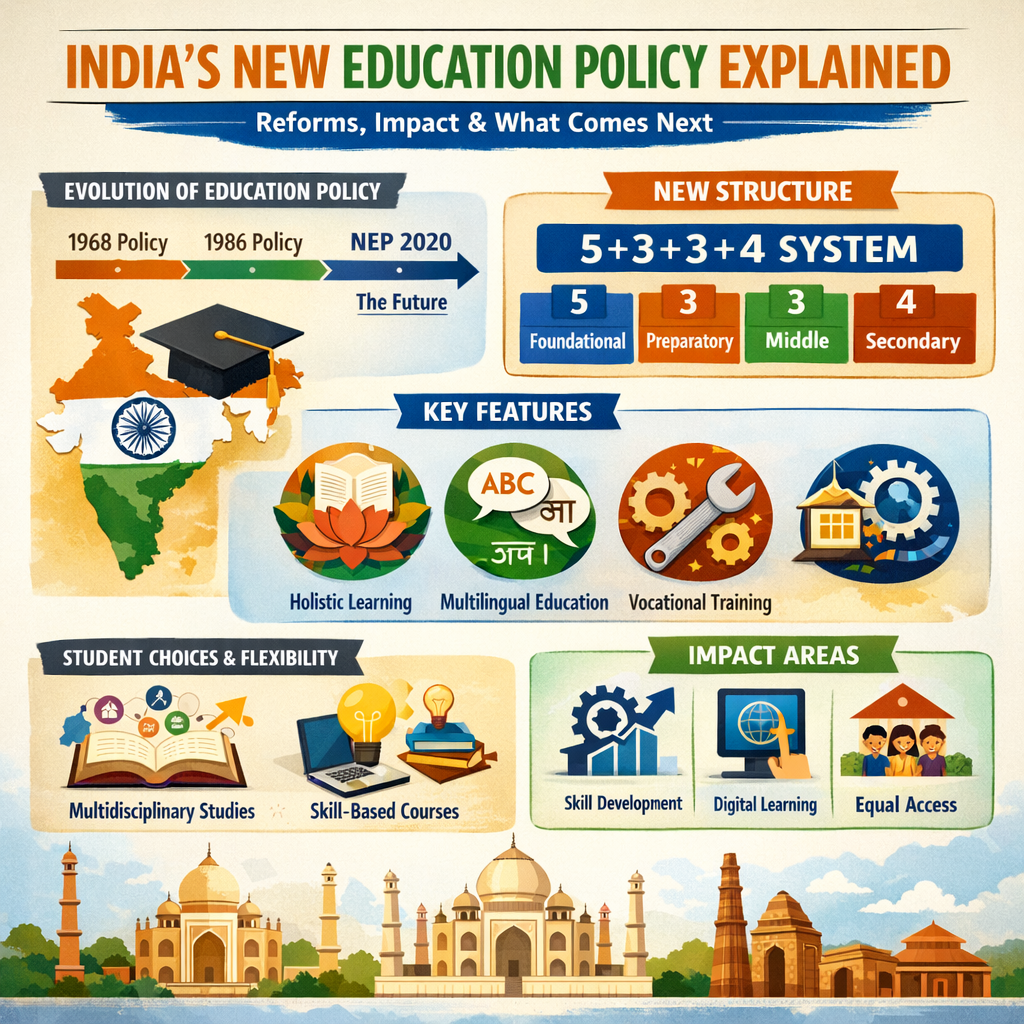
Education remains one of the most powerful drivers of long-term economic growth, social mobility, and national competitiveness. With India’s demographic advantage—where a significant portion of the population is under 30—the quality and relevance of education systems directly influence the country’s future workforce and innovation capacity.
Introduction: Why Education Reform Matters Now
The government’s announcement of a new education policy framework signals renewed intent to address persistent challenges such as outdated curricula, unequal access to quality education, limited teacher training, and the widening skills gap between academic learning and industry needs.
This policy is being positioned not merely as an administrative update but as a structural reform designed to make India’s education ecosystem more inclusive, technology-enabled, and aligned with global best practices. While implementation will occur in phases, the policy sets the direction for how schools, colleges, universities, teachers, and students will adapt to a rapidly evolving economic and technological environment.
The Core Objectives of the New Education Policy
Building a Future-Ready Curriculum
One of the central pillars of the new policy is curriculum modernization. Traditional rote-learning models are increasingly being challenged by the demands of a knowledge economy that values problem-solving, creativity, digital literacy, and interdisciplinary thinking. The policy encourages:
- Competency-based learning: Shifting the focus from memorization to the application of concepts in real-world scenarios.
- Interdisciplinary education: Allowing students to combine subjects such as science with humanities, technology with design, and commerce with data skills.
- Contemporary relevance: Regular curriculum updates to include emerging fields like artificial intelligence, data science, environmental studies, and financial literacy.
By reorienting learning outcomes toward skills and adaptability, the policy aims to better prepare students for future careers that may not even exist today.
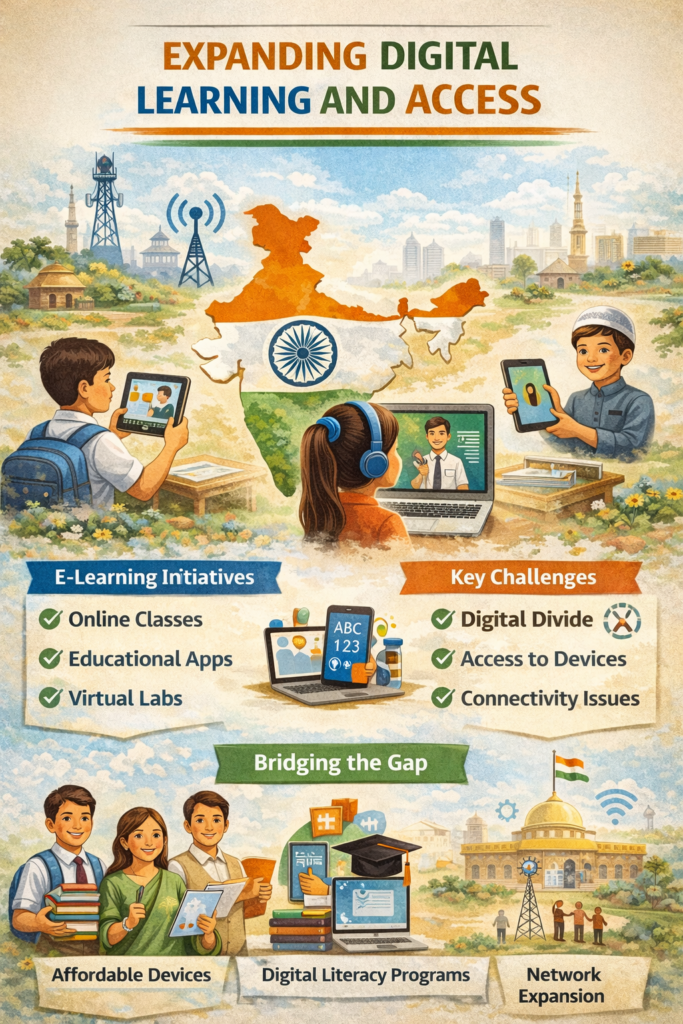
- Digital inclusion forms another major focus area. The policy recognizes that technology can help bridge geographic and socioeconomic gaps in education—provided access is equitable. Key measures include:
- Hybrid learning models: Blending classroom teaching with online resources to enhance flexibility and continuity of learning.
- Digital infrastructure: Expanding broadband connectivity, smart classrooms, and access to affordable devices for students in underserved regions.
- Teacher enablement: Training educators to effectively use digital tools and learning management systems.
This digital push is expected to improve access to quality content for students in rural and semi-urban areas while also enabling urban institutions to adopt more advanced learning models.
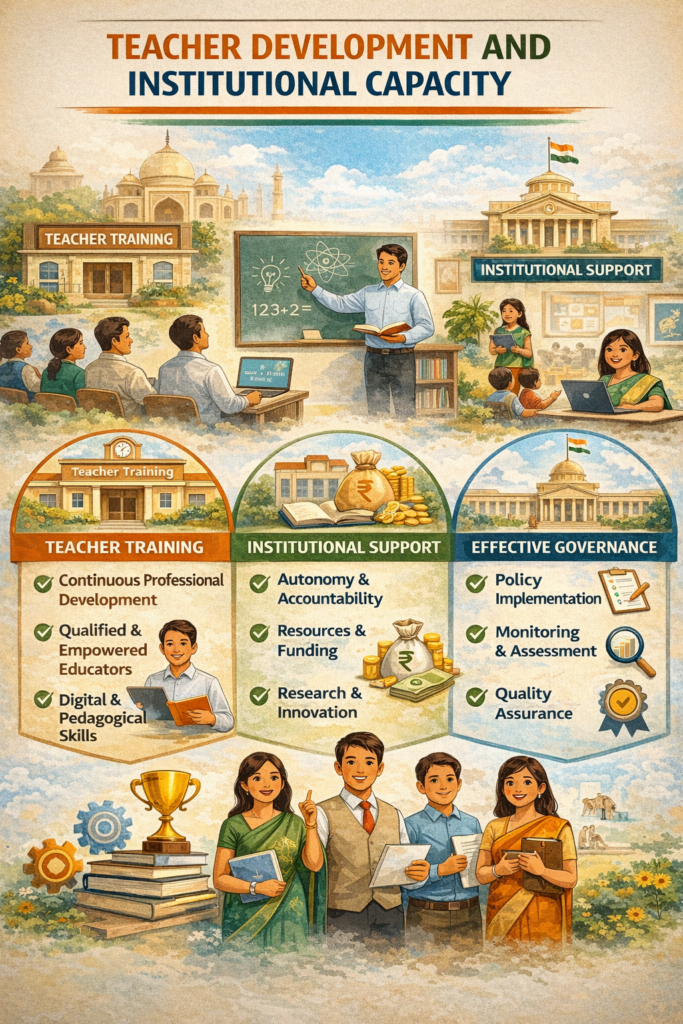
Teacher Development and Institutional Capacity
Strengthening Teacher Training
Teachers remain the backbone of any education system. The new policy emphasizes continuous professional development to ensure educators can keep pace with evolving teaching methodologies and subject-matter advancements. Proposed initiatives include:
- Regular upskilling programs: Workshops, certifications, and peer-learning platforms for teachers.
- Performance-linked development: Encouraging reflective teaching practices and outcome-based evaluations.
- Technology integration: Helping teachers adopt digital pedagogies, interactive content, and data-driven assessment tools.
By investing in teacher quality, the policy aims to ensure that reforms at the curriculum level translate into meaningful classroom experiences.
Institutional Autonomy and Accountability
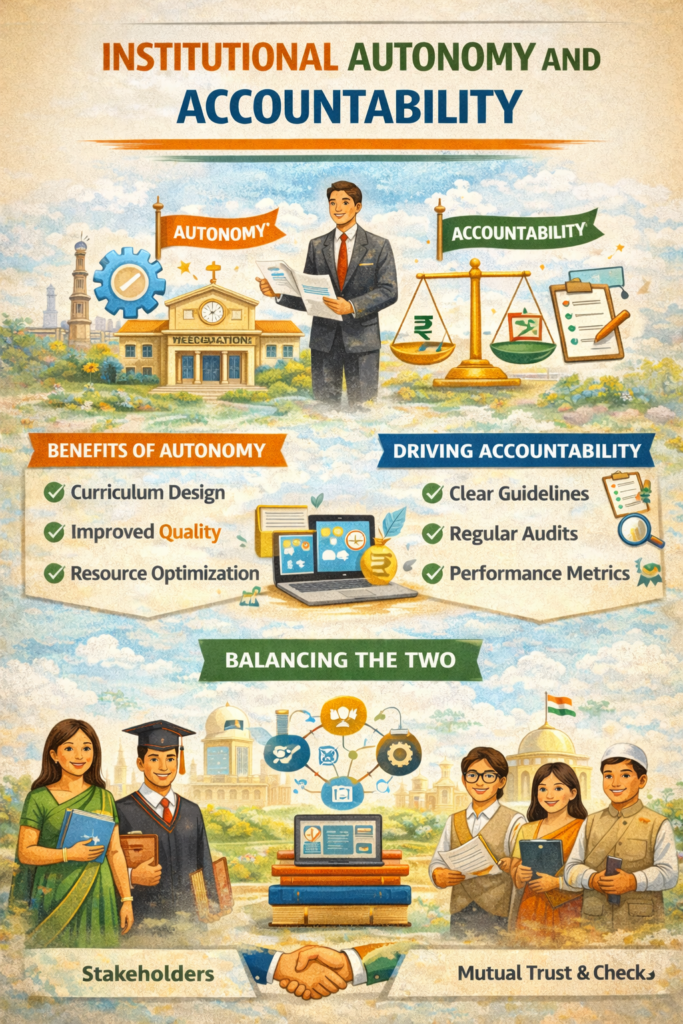
Institutions are being encouraged to adopt greater autonomy in curriculum design, partnerships, and assessment methods—while remaining accountable for learning outcomes and inclusion. This approach is expected to:
Promote innovation at the institutional level.
Improve governance through transparent performance benchmarks.
Encourage collaborations with industry and research bodies.
Autonomy, combined with accountability, could help institutions respond more effectively to regional needs and emerging global trends.
Bridging the Skills Gap: Education and Employability
Aligning Education with Industry Needs
A persistent challenge in India’s education ecosystem has been the mismatch between academic training and industry expectations. The new policy seeks to close this gap by:
- Integrating vocational education: Introducing skill-based modules earlier in the education journey.
- Industry partnerships: Encouraging internships, apprenticeships, and real-world projects in collaboration with companies and startups.
- Career-oriented pathways: Allowing flexible academic routes that support both higher education and workforce entry.
These measures are designed to improve employability while ensuring that students gain practical exposure alongside theoretical knowledge.
Encouraging Lifelong Learning
With careers becoming increasingly non-linear, the policy acknowledges the importance of lifelong learning. Modular courses, micro-credentials, and flexible entry-exit options in higher education aim to make reskilling and upskilling more accessible to working professionals. This shift reflects the reality that learning no longer ends with formal degrees.
Equity, Inclusion, and Regional Implementation
Addressing Regional Disparities
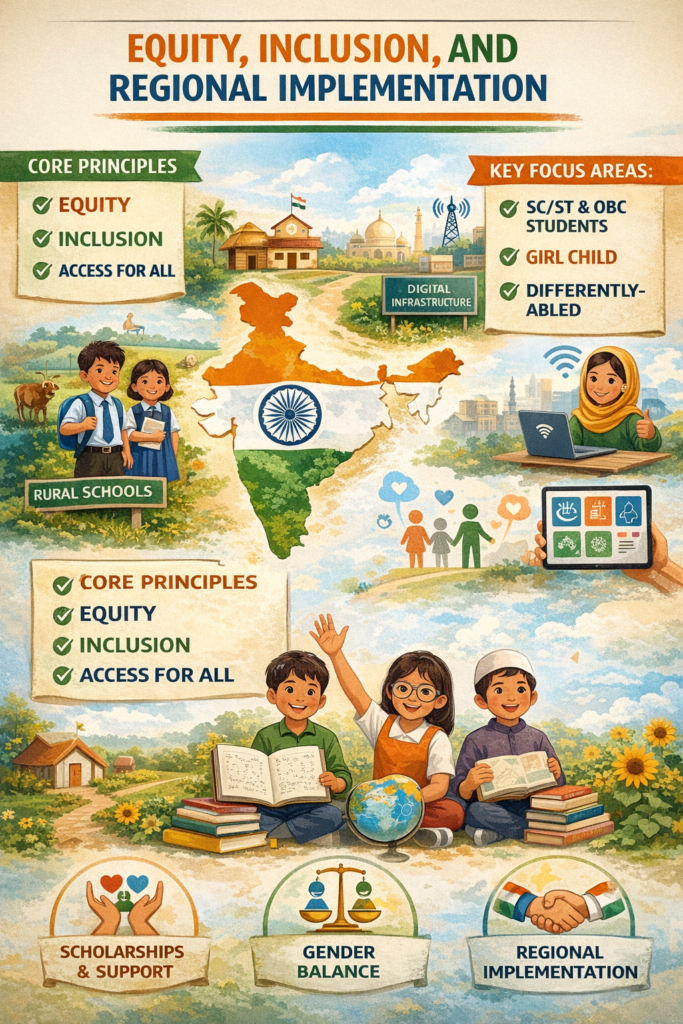
Education outcomes in India vary widely across regions due to differences in infrastructure, funding, and access. The policy underscores the need for targeted interventions in underserved areas, including:
- Increased funding for schools in remote regions
- Incentives for skilled teachers to work in challenging locations
- Partnerships with non-profits to improve community-level education outcomes
Inclusion of Marginalized Communities
Equity is central to the policy’s long-term success. Measures aimed at supporting marginalized communities include scholarships, digital access programs, and language-inclusive content. By focusing on inclusion, the policy seeks to ensure that reforms benefit not only elite institutions but also students from disadvantaged backgrounds.
Implementation Challenges and What to Watch
Practical Barriers
While the policy’s vision is ambitious, implementation will determine its real-world impact. Key challenges include:
- Funding constraints: Scaling digital infrastructure and teacher training requires sustained investment.
- Coordination across states: Education is a shared responsibility, and uniform implementation may face regional variations.
- Capacity building: Institutions and educators need time and support to adapt to new frameworks.
Measuring Impact
Over the coming years, success will likely be measured through indicators such as:
- Improvements in learning outcomes
- Higher employability of graduates
- Increased digital access in underserved regions
- Stronger industry–academia collaborations
Transparent monitoring mechanisms will be critical to ensure accountability and continuous improvement.
What Comes Next: The Road Ahead
The announcement of a new education policy sets the stage for long-term transformation, but meaningful change will depend on consistent execution, stakeholder engagement, and adaptability. Students, educators, institutions, industry leaders, and policymakers all have roles to play in translating policy vision into classroom reality.
If implemented effectively, the reforms could help build a more inclusive, skilled, and future-ready generation—one capable of driving India’s growth in a competitive global landscape. The coming months will offer early signals on how states and institutions operationalize these changes, making this a key space to watch for educators, parents, and policymakers alike.
Contents Type Ai Generated. 1
Recommended