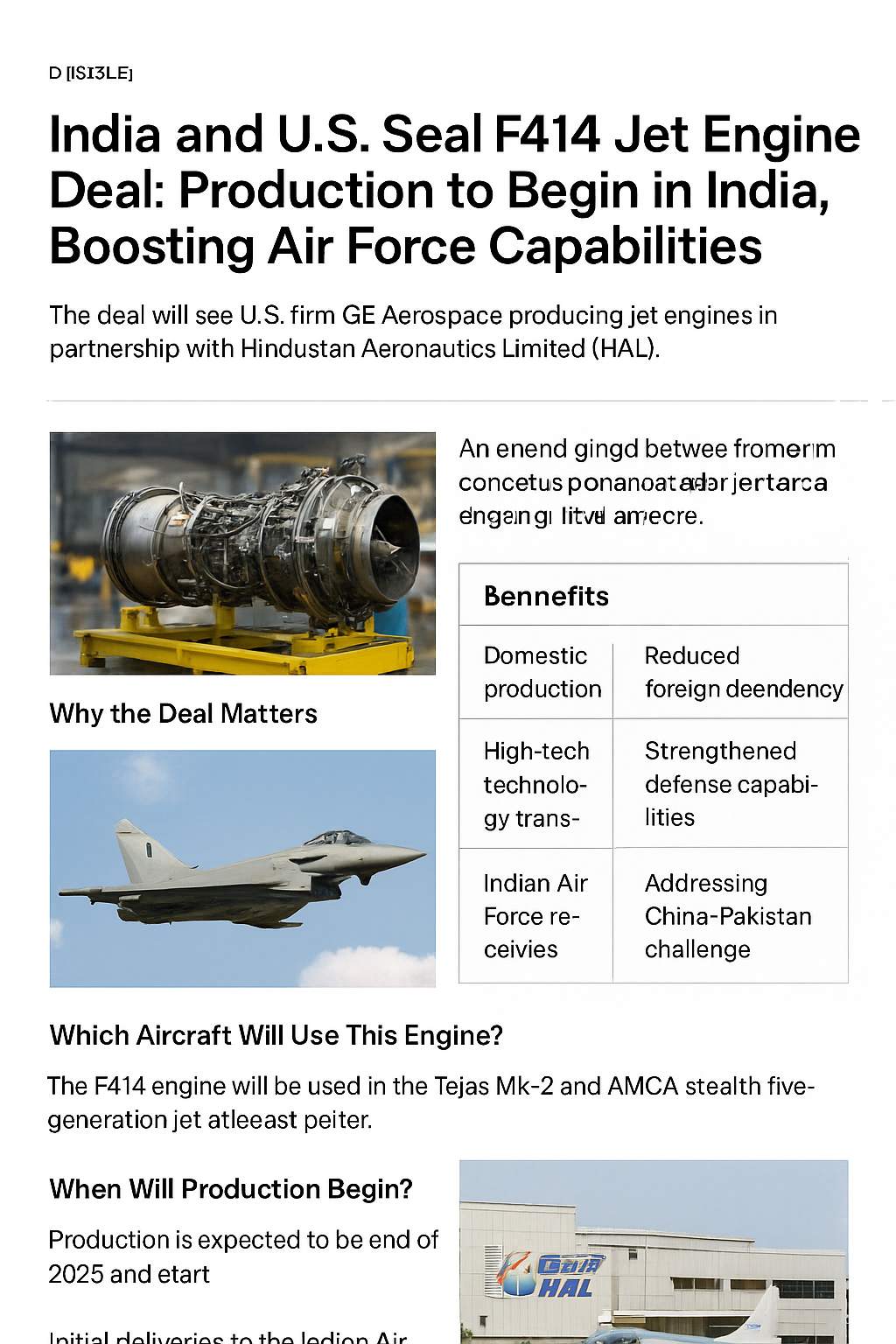
Introduction to the Jet Engine Deal
The recent jet engine deal between India and America represents a significant milestone in defense collaboration between the two nations. Historically, the partnership has evolved from limited engagements to a robust defense cooperation framework that encompasses technology transfer, joint ventures, and co-production initiatives. The strategic importance of this deal cannot be overstated, as it not only symbolizes a deepening relationship but also serves to enhance the defense capabilities of both countries.
Central to this deal is the objective of fostering a self-reliant defense sector in India, particularly in advanced aviation technologies. The collaboration aims to localize the production of jet engines for military aircraft, which is a critical area for India’s defense manufacturing goals. By advancing their capabilities in this technology, India positions itself as a key player on the global stage and enhances its strategic autonomy, especially in the context of regional security dynamics.
Moreover, the jet engine deal is indicative of a broader trend in U.S. foreign policy that favors strengthening ties with allies through defense collaborations. This partnership not only facilitates the sharing of cutting-edge technology but also aligns with the intérêts of both countries in countering common threats. It allows U.S. manufacturers to tap into the growing Indian defense market while providing India access to advanced technologies that have hitherto remained out of reach.
Key figures involved in this venture include high-ranking government officials from both sides and notable defense manufacturers. The engagement between the U.S. defense contractors and their Indian counterparts reflects a commitment to bolstering the industrial base and enhancing operational readiness. As discussions continue and frameworks evolve, the jet engine deal stands poised to redefine the contours of U.S.-India defense relations and contribute significantly to both nations’ defense industries.
Key Components of the Jet Engine Deal
The India-America jet engine deal encompasses several crucial components that play a pivotal role in shaping its overall structure and efficacy. At the heart of this agreement are advanced jet engine models that are designed to enhance both operational efficiency and technological innovation. The specific types of jet engines involved in the deal primarily include the F414 engines, which are known for their superior performance in various military and commercial aviation applications.
A significant aspect of this agreement is the technology transfer agreements that facilitate the sharing of critical technological expertise between the U.S. and India. This transfer not only pertains to the manufacturing techniques but also includes insights into maintenance and operational strategies, thereby enabling India to build indigenous capabilities in the aerospace sector. Such collaborations are expected to bolster India’s defense manufacturing ecosystem while simultaneously providing the U.S. with a robust partner in the Asia-Pacific region.
Furthermore, the intended use of these jet engines is directed toward India’s upcoming aircraft projects, which include the indigenous Light Combat Aircraft (LCA) and the future Advanced Medium Combat Aircraft (AMCA). Both aircraft are designed to fulfill strategic defense needs, making the incorporation of advanced jet engine technology critical for maintaining operational advantages.
Financial considerations are equally important to the deal. There are substantial investment commitments from both the Indian and American governments, reflecting a strong dedication to the partnership. The projected timeline for implementation outlines significant phases, with the aim of achieving operational capability within the next few years. These components collectively underline the strategic significance of the India-America jet engine deal, representing a milestone in international defense cooperation.
Impact on the Indian Aerospace Industry
The recent jet engine deal between India and the United States is poised to significantly influence the trajectory of the Indian aerospace industry. One of the most pressing areas of impact will be the enhancement of indigenous manufacturing capabilities. By collaborating with American firms, Indian manufacturers can gain access to advanced technologies and best practices that can catalyze the development of a more robust domestic production ecosystem. As a result, the joint venture is expected to lead to the establishment of high-tech manufacturing facilities in India, which will not only produce jet engines but also foster innovation in other aerospace components.
Moreover, this partnership is likely to create a multitude of jobs across various sectors. Skilled labor is essential for aerospace manufacturing, and the deal presents an opportunity for workforce development through training programs and educational initiatives. The increase in job creation will not only benefit employees and their families but will also stimulate local economies, leading to enhanced industrial growth in regions that host manufacturing hubs.
Technologically, the collaboration will usher in a new era of advancements, facilitating knowledge transfer between Indian and American engineers. This vibrant exchange will further accelerate India’s capabilities in producing advanced aerospace systems and components. Furthermore, the deal positions India favorably in terms of achieving strategic autonomy in defense production. It aligns with the government’s vision for self-reliance, not only reducing dependence on foreign suppliers but also enhancing national security through a strengthened aerospace sector.
In addition, the implications of this deal extend to the global aerospace market. By boosting indigenous capabilities and fostering innovation, India is set to become a competitive player in the international arena, thereby enhancing its position as a key contributor to global aerospace supply chains. This development could lead to increased collaboration opportunities, further integrating India into high-stakes global manufacturing. The Indian aerospace industry stands on the brink of transformation, driven by the potential of this landmark deal.
Future Prospects and Challenges
The India-America jet engine deal represents a significant development in defense collaboration, which holds the potential to reshape not only bilateral relations but also geopolitical dynamics in the region. As both nations engage in this undertaking, several factors will likely influence the future trajectory of this partnership. Opportunities abound, particularly in areas of technology transfer, indigenization efforts, and shared research and development. This cooperation could lead to advancements in aerospace technologies, strengthening both country’s defense capabilities.
However, challenges may arise from domestic political landscapes in both nations. For instance, changes in leadership or shifts in policy priorities could affect the continuity and momentum of the jet engine deal. Historically, defense collaborations have been susceptible to political fluctuations, which can delay or alter the course of such initiatives. It will be crucial for both governments to maintain a stable diplomatic dialogue that fosters an environment conducive to sustained engagement.
Additionally, third-party nations may introduce complexities to the equation. The geopolitical climate in Asia, marked by the presence of influential players such as China and Russia, necessitates careful maneuvering. These nations could respond to the strengthening ties between India and the United States by seeking to enhance their own defense partnerships or by exerting economic and diplomatic pressures. The reaction of these countries will need to be closely monitored, as they could impact the strategic outcomes of the jet engine collaboration.
Ultimately, the successful outcome of this deal may pave the way for future collaborations in defense and technology sectors. A strong bilateral understanding can lead to enhanced joint ventures, innovative projects, and the establishment of robust supply chains. This, in turn, would contribute to long-term growth in the defense industry and strengthen overall ties between India and America.
Sources: GE Aviation, HAL, India-US Joint Statement.